Follow us
Stellantis to Develop India-Made Jeep for Global Markets Through Tata Motors Partnership
The automaker plans to leverage its joint venture with Tata Motors to establish the country as a low cost export and engineering hub for its upcoming global product portfolio.
 By Prerna Lidhoo
 1931 Views


Stellantis will develop and assemble a new Jeep vehicle in India for global markets through its joint venture with Tata Motors, as the automaker positions India as a key low-cost manufacturing and export hub for its future new energy vehicles.
According to Grégoire Olivier, Head of Asia Pacific region at Stellantis, India will play a central role in Stellantis’ next phase of global growth through its long-standing partnership with Tata Motors as it will provide a “highly competitive platform” for the upcoming Jeep model. “The upcoming Jeep model is expected to become one of five globally-oriented products Stellantis is developing in Asia using local partnerships and lower-cost engineering ecosystems,” he said.
For India, this is a strategic shift in Stellantis’ positioning. Rather than treating the country only as a sales market for brands such as Jeep and Citroën, the company now sees India as an export and product-development base capable of supporting global programmes at significantly lower costs.
The Tata partnership is especially important because it gives Stellantis access to local engineering scale, supply chains and cost structures that are increasingly difficult to replicate in Europe or North America.
“With Tata, we are strengthening our product offering in India and supporting exports to APAC, Middle East and Africa and South America through synergies in manufacturing, supply chain, product and technology,” Stellantis CEO Antonio Filos said during the Investor Day 2026 presentation.
Olivier said that the India-developed Jeep project would help Stellantis remain “asset light” while improving competitiveness globally.
He adds that Stellantis is deepening its confidence in India’s role in the global EV and smart-car ecosystem. “The Citroën smart car programme in India, for example, shows continued focus on affordable, compact vehicles engineered out of the country, he said.
“Stellantis plans to export these India and China-developed vehicles to over 50 countries worldwide. The combined vehicle and model sales generated through these programmes could cumulatively exceed €60 billion over the next five years,” he said.
The India strategy, however, sits within a much larger APAC playbook that is increasingly dependent on partnerships rather than traditional standalone manufacturing investments. A major pillar of that strategy is Stellantis’ relationship with Chinese EV maker Leapmotor, which Olivier described as one of the fastest-growing battery electric vehicle makers in China with one of the industry’s most competitive cost positions.
Leapmotor sold around 600,000 battery electric vehicles in 2025, making it the world’s sixth-largest BEV manufacturer. Stellantis owns close to 20 percent of the Chinese company and has secured exclusive rights through Leapmotor International — a joint venture in which Stellantis owns 51 percent — to sell Leapmotor vehicles outside China.
The company’s ambitions around Leapmotor are aggressive. Stellantis aims to sell 180,000 Leapmotor EVs internationally next year, leveraging Chinese EV cost advantages to expand in regions where affordability remains critical.
Alongside Leapmotor, Stellantis is also leaning heavily on its decades-old partnership with Chinese automaker Dongfeng Motor Corporation. The two companies plan to develop and manufacture two new Jeep models and two Peugeot models in China through their DPCA joint venture, as well as being in talks for another joint venture related to production of electric vehicles (EVs).
Olivier said Stellantis aims to sell 100,000 “localised cars” globally by 2028 through its Dongfeng and Tata partnerships, with volumes expected to grow further thereafter. He also said Stellantis expects to double its APAC business while achieving an adjusted operating income margin of 4–6 percent.
According to Antonio Filosa, Chief Executive Officer and Executive Director, North America & American Brands, Stellantis, the future auto market will be fragmented across regions, technologies and customer preferences. That realization is driving a broader overhaul of how the company operates globally.
At the heart of Stellantis’ new strategy is the belief that the global auto industry is being reshaped by five major forces: regional fragmentation, rising Chinese competition, increasing cost pressures, an uneven pace of electrification and the growing importance of technology and artificial intelligence. The company currently operates in India through brands such as Jeep and Citroën, both of which have faced challenges scaling volumes in a highly competitive and price-sensitive market. With empowered regional operations, Stellantis may be able to adapt its India strategy faster and tailor products more specifically to local conditions.
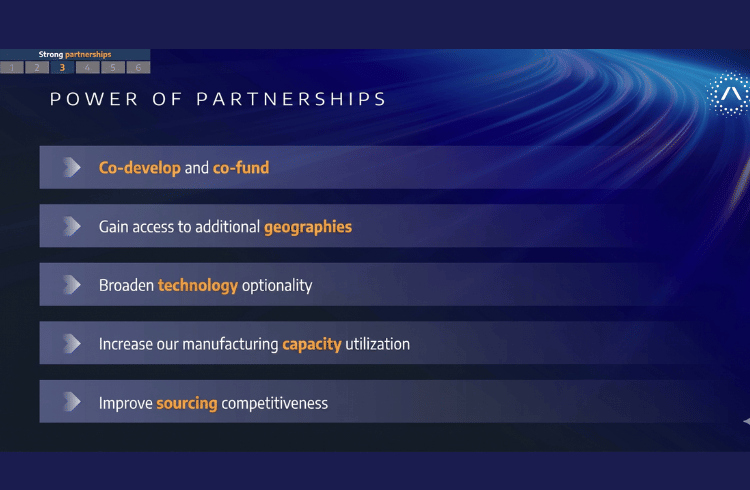
Filosa added that the company's long-term roadmap or “Fastlane 2030” strategy, will be built around six pillars: sharper portfolio management, disciplined capital allocation toward new technologies, stronger partnerships, an optimized manufacturing footprint, disciplined execution and empowered regions.
ALSO READ:
Stellantis To Invest €60 Billion By 2030, North America Gets Biggest Share

RELATED ARTICLES

New Sorento Midsize SUV Sells 1,739 Units in First Month, Kia India Sales Grow 29% in H1 FY2027
 Ajit Dalvi
 17 Oct 2026
In its first full month, Kia India’s ICE-powered flagship SUV contributed 5% to record monthly dispatches of 32,017 unit...


KTM Opens Manaus Plant with Annual Capacity of 20,000 Motorcycles
 Arunima Pal
17 Oct 2026
Arunima Pal
17 Oct 2026
The facility will produce ten KTM and Husqvarna models across motocross, enduro and adventure segments, with production ...

Tesla India opens Roadster Reservations, Adds Acceleration Boost to Model Y L
Arunima Pal
17 Oct 2026
Tesla opens Roadster reservations in India, with production due in 2028, and gives Model Y L a free 0–100 km/h boost to ...